Torture Chamber
The Torture Chamber is a hexagonal room lined entirely with mirrors, constructed by Erik in the double case of the foundation walls of the Paris Opera House. It is a space designed not merely to confine but to systematically destroy the sanity of anyone trapped inside, through a combination of optical illusion, extreme heat, and sensory manipulation. The Persian, who had seen a similar chamber during the "rosy hours of Mazenderan," recognizes it immediately as one of Erik's most diabolical creations.
Design and Mechanism
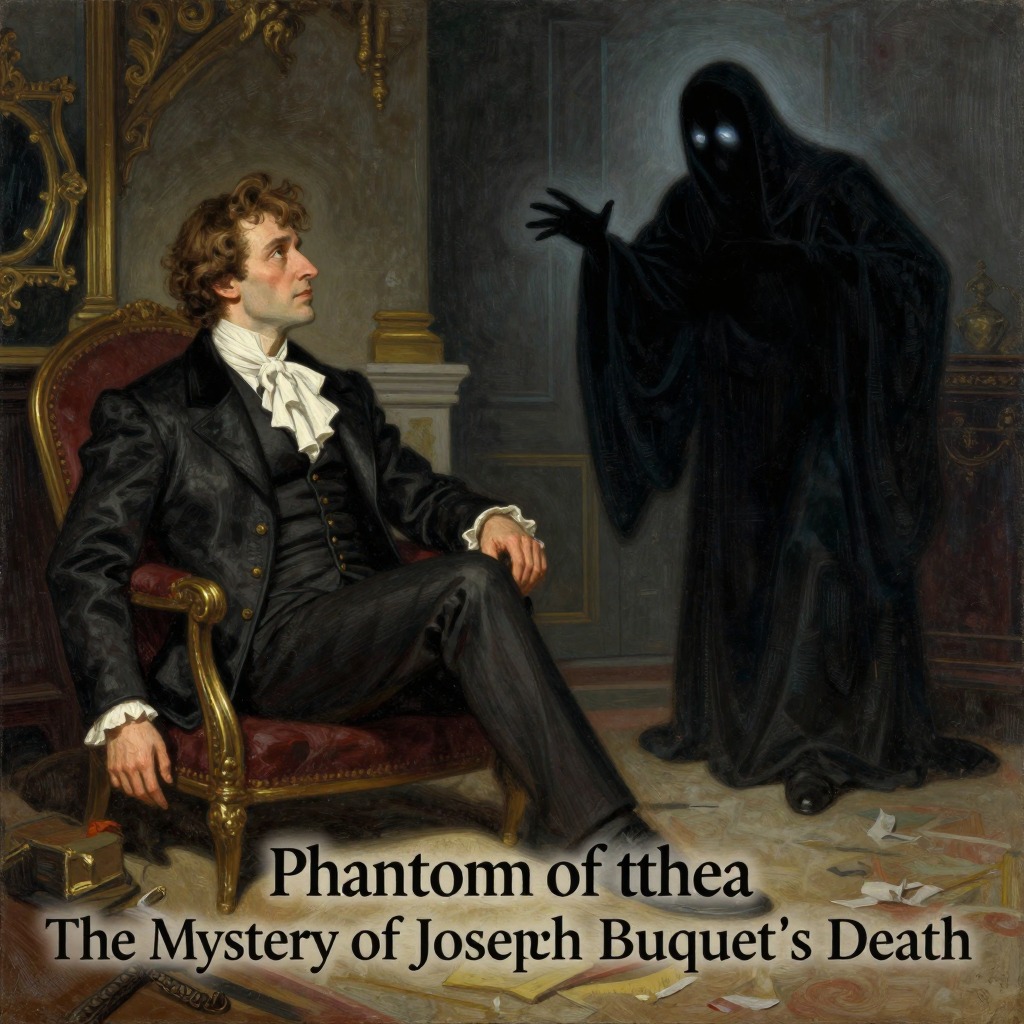
The room is a perfect hexagon, each wall covered with mirrors so thick they can withstand any assault by a victim. In one corner stands an iron tree with painted leaves, made of metal to resist attack. The mirrors multiply the room indefinitely, creating the illusion of a vast space. The ceiling can be lit, and an ingenious system of electric heating allows the temperature to be raised at will. The room contains no furniture, giving the prisoner nothing to grasp. The decorative scheme is produced by rotating drums or rollers in the corners, each divided into three sections that bring different scenes into view. The Persian notes that the mirrors in the chamber are already scratched and "starred," evidence that it has served a purpose before—likely for Joseph Buquet, who was found hanged near the entrance.
The Ordeal of the Persian and Raoul
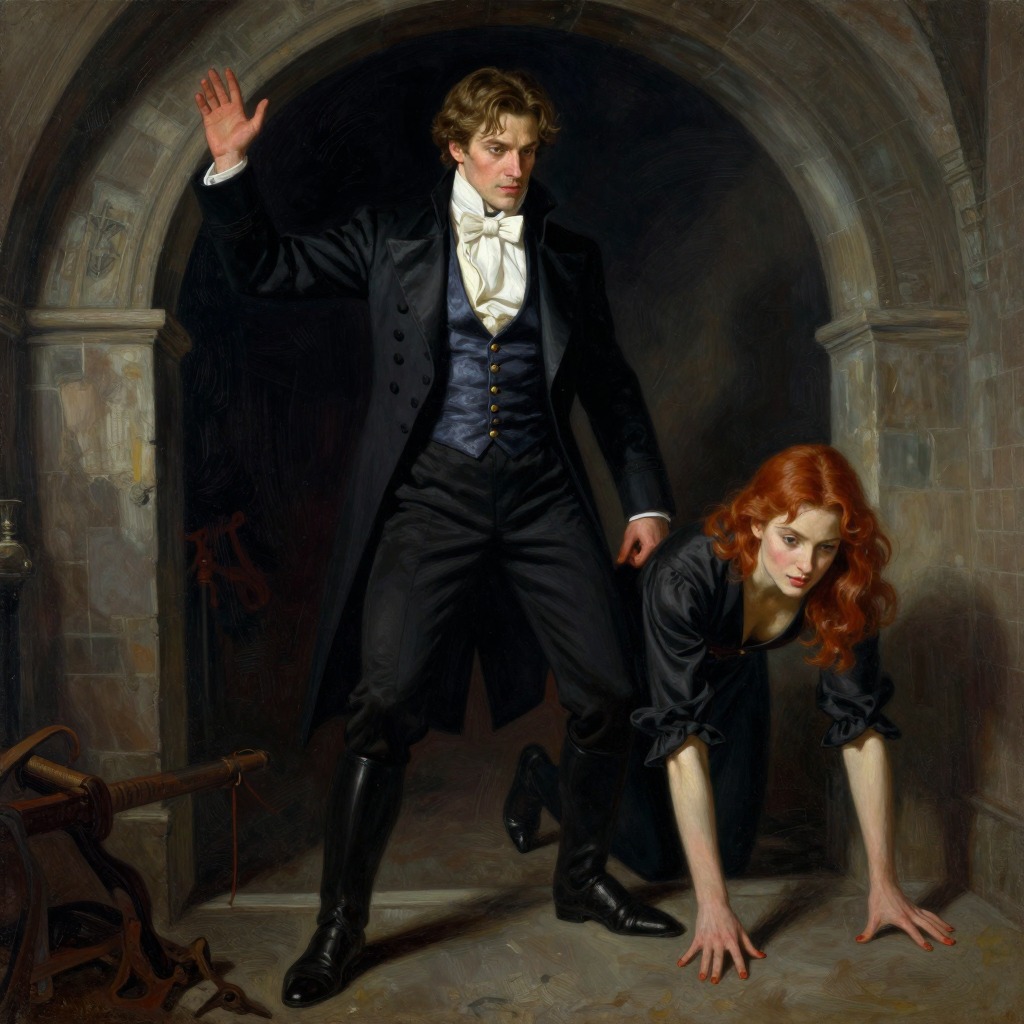
The Persian and Raoul de Chagny enter the chamber through a secret passage in the third cellar, dropping into it from a height that makes retreat impossible. The only possible exit is a door leading to the Louis-Philippe Room where Christine Daae is held, but it is invisible from inside the chamber. The Persian, familiar with Erik's tricks, attempts to find the spring that controls the door, groping over the glass panels. Raoul, already distraught, begins to succumb to the torture: he lies on the floor, declares the "view is splendid," and speaks of walking in the forest for days. The heat becomes unbearable, and both men suffer from intense thirst. The Persian, despite his knowledge, fails to find the spring, and the room cycles through its three scenes: an equatorial forest, a stony desert, and finally a mirage of an oasis with water that reflects the iron tree. The sound of rain is produced by stones falling inside a long box, and the roar of a lion is imitated by a rubbed string on a tabour. Raoul, driven mad by thirst, licks the burning mirror. He puts a pistol to his temple, and the Persian stares at the Punjab lasso, ready to hang himself.
Discovery of the Gunpowder and the Scorpion Choice
At the moment of despair, the Persian discovers a black-headed nail in a groove in the floor—the spring. It releases a trapdoor leading to a cellar below. They descend and find barrels, which they believe contain water. When the Persian bursts the bung, he discovers the barrels are filled with gunpowder. They realize Erik's plan: if Christine refuses to marry him, he will blow up the entire Opera house at eleven o'clock the next evening. The Persian and Raoul, trapped in the chamber, hear Christine's voice through the wall. She tells them that Erik has given her five minutes to choose between a scorpion and a grasshopper, two bronze figurines on the mantelpiece. The Persian, suspecting a trick, warns her not to touch the scorpion, but Erik returns and reveals that the grasshopper will trigger the explosion. Christine turns the scorpion, which floods the gunpowder cellar with water, saving everyone. The water rises in the chamber, nearly drowning the Persian and Raoul before Erik, moved by Christine's tears and her promise to be his living wife, releases the water back into the lake.
Narrative Role and Significance
The Torture Chamber is the climax of Erik's campaign of terror and the ultimate test of his victims' endurance. It embodies his genius for mechanical invention and his sadistic pleasure in psychological cruelty. The chamber's three scenes—forest, desert, mirage—are a graduated assault on the senses, each designed to exploit a different human vulnerability: disorientation, thirst, and hope. The Persian's prior knowledge of the chamber from Mazenderan gives him a slight advantage, but even he is nearly broken. The chamber also serves as a tomb for Joseph Buquet, whose death is linked to the Punjab lasso found at its entrance. The room's final function is as a stage for Christine's choice, where her decision to turn the scorpion—and Erik's subsequent renunciation—resolves the central conflict. The chamber is a physical manifestation of Erik's isolation and his desperate, twisted desire for love, a space where he can both punish and be pitied.